
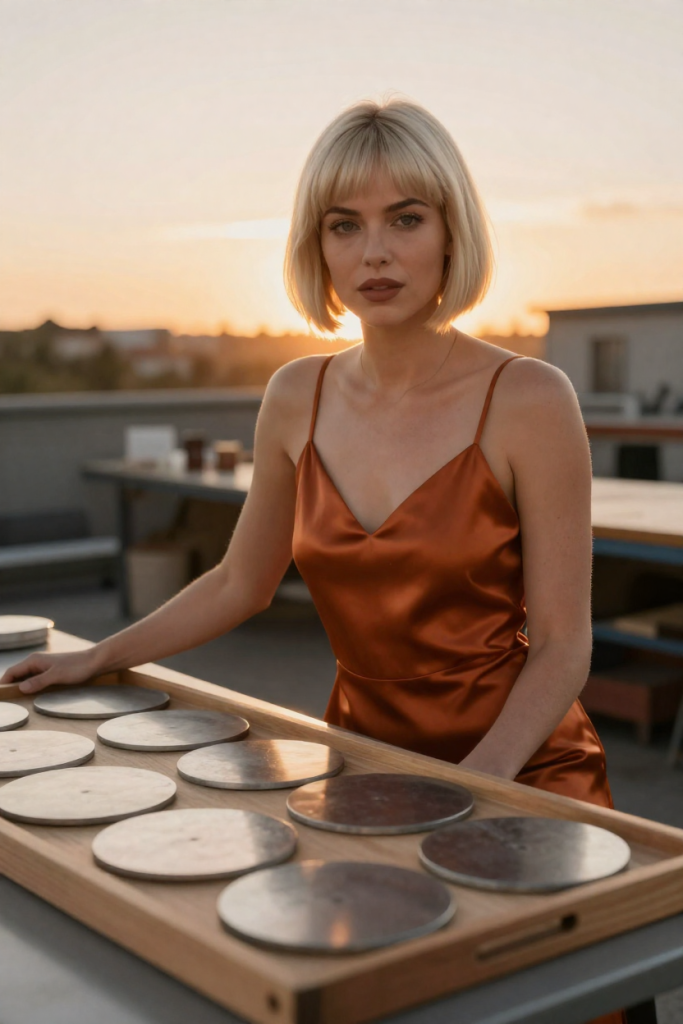
Put two renders of the same muse side by side and the better one is almost always the better-lit one. Yet lighting is the clause creators leave out — the prompt specifies her hair to the strand and the light not at all, and the model, given no weather, renders fog. Light is the second subject of every portrait. Write it like one.
The four decisions
Source. Name the object making the light: a window, a lamp, a forge door, late sun. Objects give the model geometry; abstractions give it nothing. Direction. From the left, from behind, from above. Direction is what carves a face out of a flat oval — side light is the cheapest cheekbone in the studio. Temperature. Warm or cool, stated in words the scene agrees with: candle-warm in a timber room, cold daylight in a stone one. Mixed temperatures are allowed when the scene earns them — warm lamp against cool window is a classic — but they must be assigned, not accidental. Falloff. What the light does at the edges: “background falling to shadow” buys you depth and hides a multitude of background sins.
Two clauses that fix most portraits
For lamp work: “warm lamp light from the left, background falling into soft shadow”. For window work: “late afternoon window light from the right, cool shadows”. Paste either into a brief and the same muse gains a room, a time of day and a mood — three things no adjective stack has ever given her.
Light and series
In a series, the lighting clause is part of the character sheet. Change the room, change the wardrobe, keep the weather — or change the weather deliberately and note it in the log as the variable. Light is how a set of frames reads as one shoot instead of twelve auditions.